

#05 The Rockstar Isn't Dead
The rockstar archetype, with it's drugs, sex and rock and roll, was supposed to die in the 90s. Here's why we're in need of it in 2026.

I grew up to the soundtrack of my dad’s Rock FM radio on the way to school every morning. Everyday, at 7am, I would nod along to old classics, my dad’s thumb marking the beats of the music against the driving wheel.
A few years later, that inheritance mutated into an obsession with emo punk rock. I shuffled songs on my iPod sung by long haired teenagers with excessive eyeliner, theorising about the betrayal and the unbearable tragedy of being sixteen. I dressed in black, but didn’t necessarily adopt much else of the emo-aesthetic - a mercy for both my teenage photographs and anyone forced to look at them now.
After highschool, however, I mainly abstained from rock and its derivatives up until about last year, when I discovered Linkin Park’s new album.
It all went downhill from there.
I listened to Linkin Park on my commute into Shoreditch. While doing my food shop. On the tube. I feigned surprise when my Spotify Wrapped revealed that my most-listened-to songs of 2025 were all Linkin Park.
I’m proud to say I began 2026 with a noble new year’s resolution: to diversify my music taste beyond one single alt rock artist.
I had finall understood, after all these years of depriving myself of my true pleasures — a headbanging guitar solo, for example — that I could indulge again. Start listening to rock, in whatever form it arrived. Allow myself back into the genre, with all its leather, melodrama and emotion.
Maybe, this time, not exclusively Linkin Park.
And it was around then that my feed began recommending him: a young, charismatic, long-haired, sweat-slicked icon in leather and eyeliner. Yungblud.
This is how I became re-acquainted not just with rock music, but with its fanbase’s most enduring archetype: the rockstar.
Rock Back in The Day
The rock star figure emerged in the 1950s–1960s as a cultural hero, replacing movie stars and politicians as the central iconic figures of youth culture. It arose in the context of post‑war societies that were highly ordered, conformist, and morally restrained.
After World War II, the US and Europe rebuilt around order. Having experienced the complete opposite for over six years, social organisation helped people feel in control. Daily life became standardised through suburbia, uniform shopping centers, mass media, and national brands, where families lived in similar houses, drove the same cars, and watched the same TV.
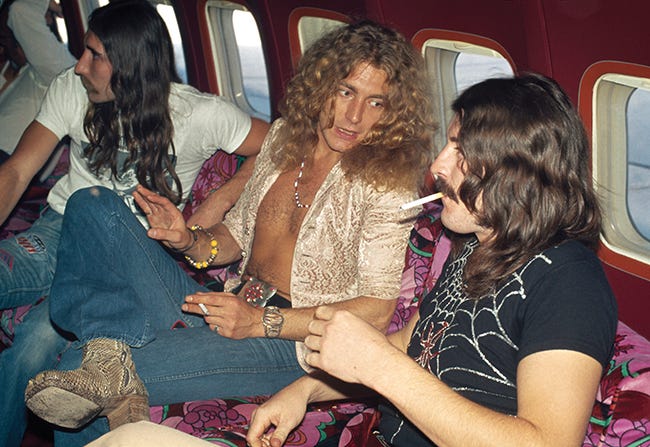
The rockstar was the antithesis of this new normal.
Stars like Elvis, Dylan, the Stones, and later Springenstein gave young people a visible, autonomous figure who seemed to speak for their frustrations, pleasures, and ambitions, rather than for uniformity. They were often working‑class and they used music, style, and performance to signal that they were outside ‘polite society’ and connected to the street, the underground, and the counter‑culture.
The figure of the rockstar represented a way to live dangerously and freely, to challenge gender roles and sexual norms, and to assert that marginal or ordinary lives could indeed be spectacular.
Rockstars were sexy, messy, chaotic and unhinged… all the things post-war societies were trying to evade.
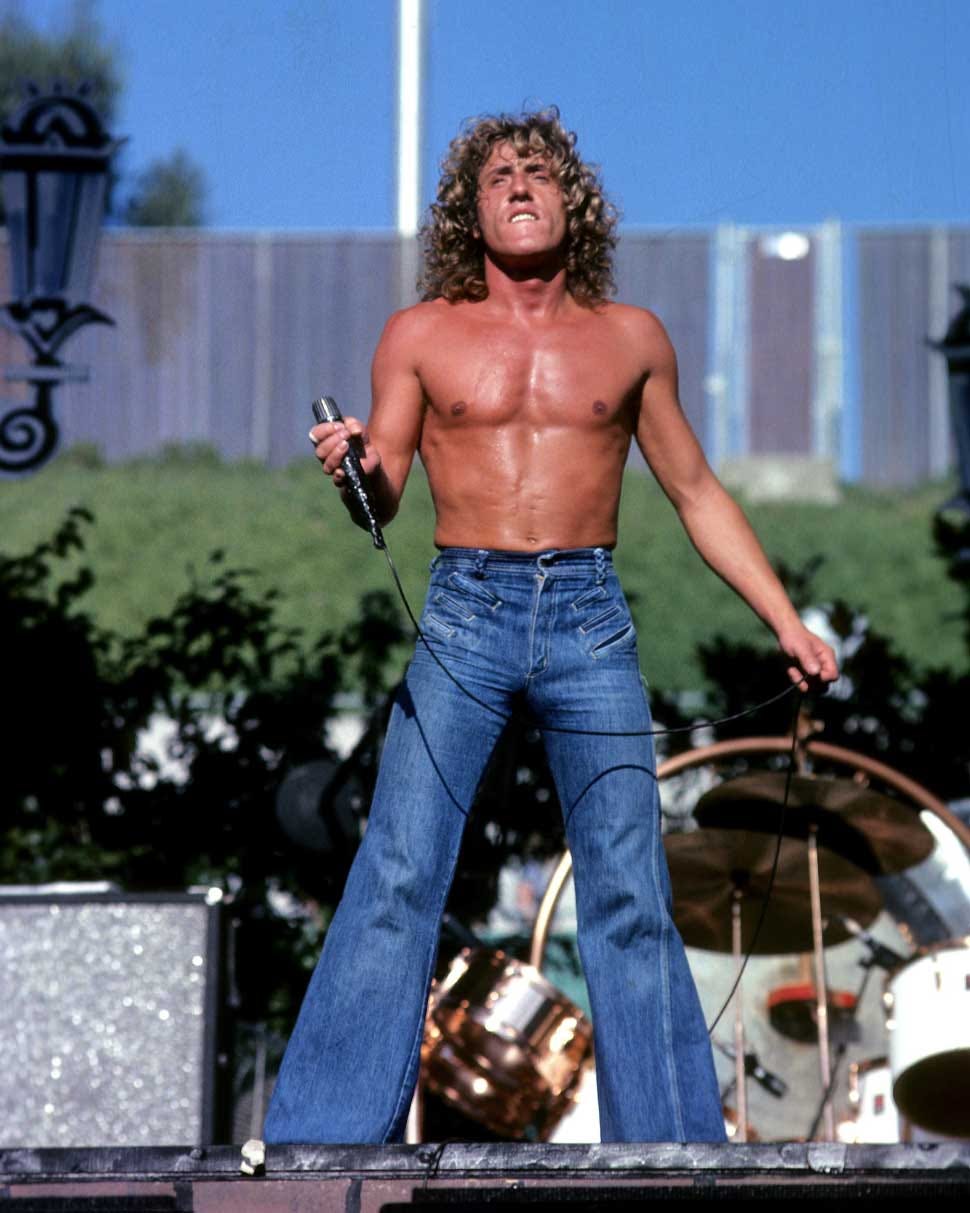
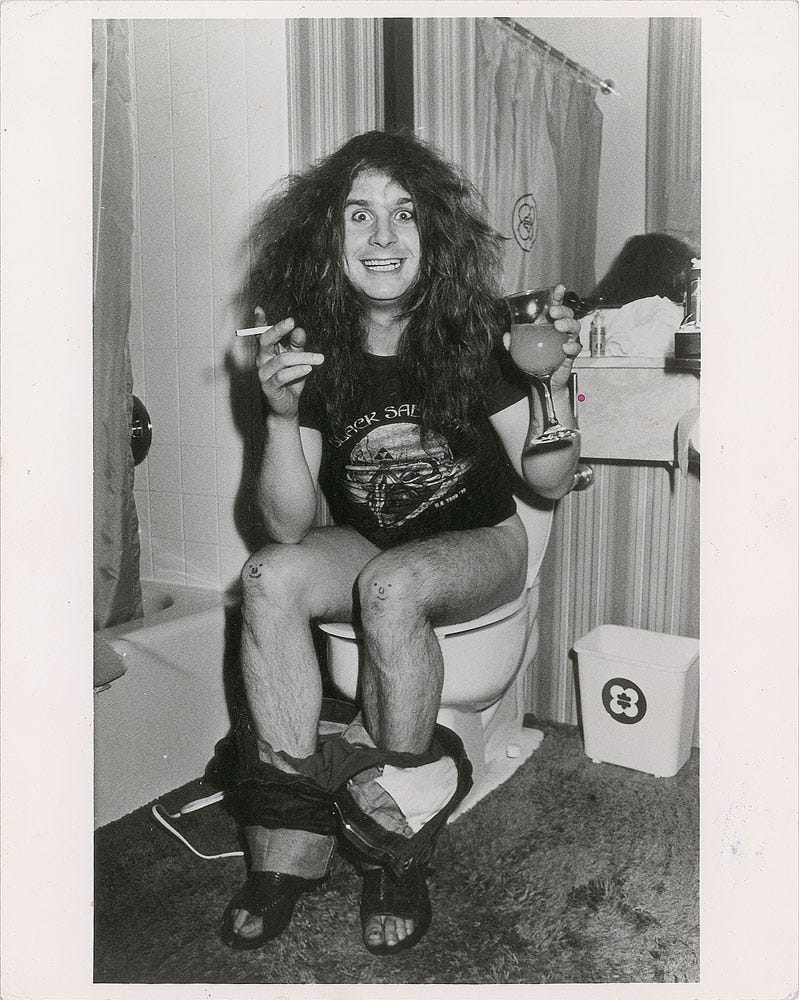
Rock Now
Rock music died in 2009, with critics claiming the 2010s were the first decade since the 1950s without a significant rock presence at the top of the charts. The genre was sidelined, and other emerging subcultures gained traction in the fringes of society.
As of 2026, however, things seem to be changing, and the internet is claiming a comeback. This shift is underscored by the involvement of rock’s most notorious figures: Ozzy Osbourne, Lenny Kravitz, Dave Grohl, and Roger Daltrey. In a world still defined by guitar solos and long hair, their opinions still carry weight—and they all endorse Yungblud.
This is how I started to realise that rock is back.
The Archetype of The 60s Rockstar in 2026
As Rolling Stone put it, Yungblud works so well as the old 60s rock star archetype in the 2020s because he’s resurrecting its core traits (the theatrical rebellion, hedonism, inclusivity, and a full‑blown “rock star” persona), but updating them for Gen Z, social media, and a more self‑aware, vulnerable type of masculinity.
His shows are pyrotechnic, arena‑scale, and confrontational, with fire cannons, confetti, and speeches. He dresses in smeared eyeliner, tight pants, long hair, and campy, glam‑punk uniforms, directly echoing the visual code of 70s–80s rock and glam. He openly talks about chaos, drugs, late nights, and emotional wreckage, and videos and interviews frame him as a “Tasmanian devil of pop‑rock” who lives on the edge. It’s an embodiment of vintage rock: the idea that the star is dangerous, wild, and out of control, but also miraculously creative because of it.
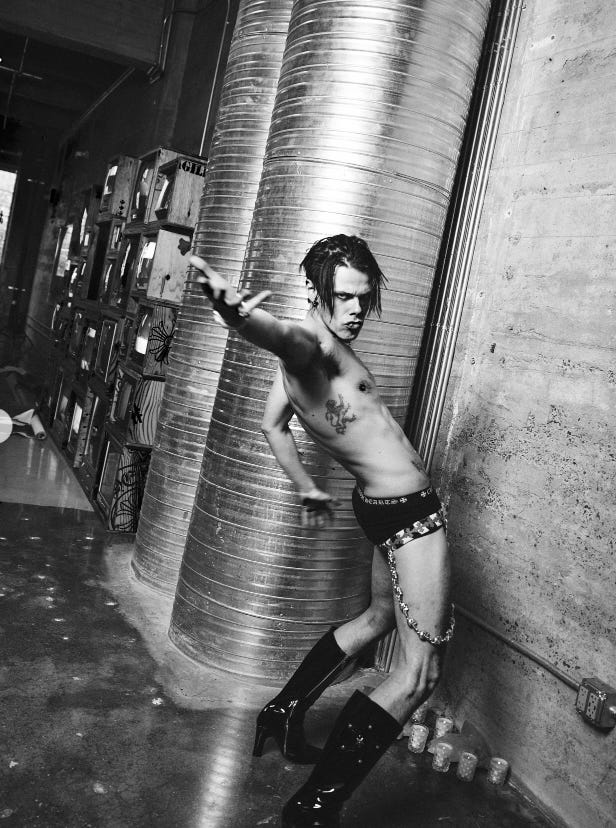
In 2026, the rock star image is a fitting match for a cultural moment that is unequivocally anti‑digital. Contemporary figures who revive that image carry the classic visual code of 70s–80s rock and glam, but repurpose it for a new set of values. The old package of rebellion and hedonism is now being used to talk about mental health, gender, and youth anger, not just chaos and excess. At festivals and arena tours in 2026, these shows are framed as spaces where people can “bring your anger and leave it,”.
It works. It keeps the drama and danger of the old archetype while aligning it with a generation that wants catharsis, connection, and the sense that emotions are legitimate and collective.
Rock and Design
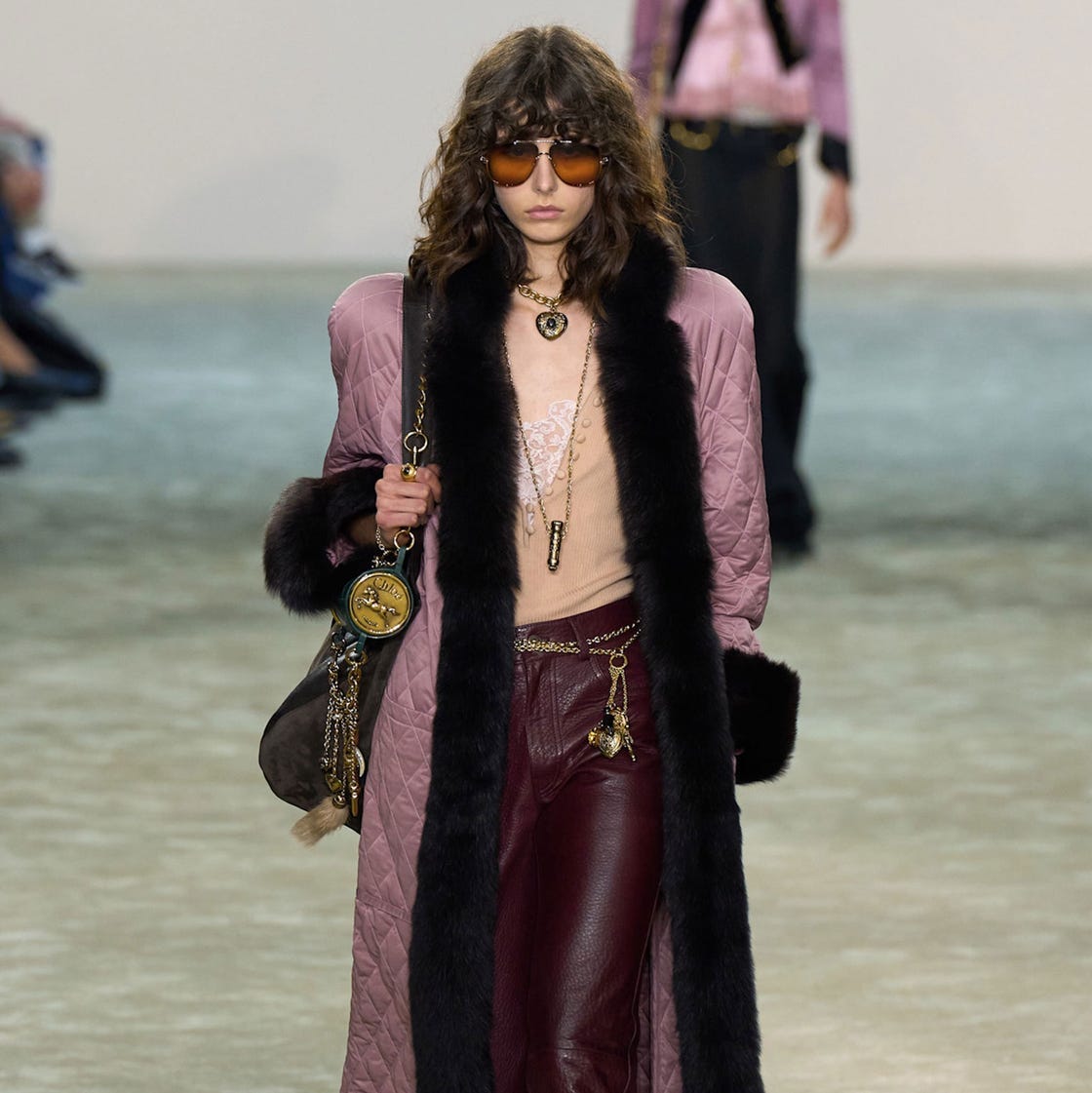
Rock aligns closely with an anti‑standardisation mentality that is surfacing in the fringes as AI optimises everything around us. In design, this is expressed through deliberate messiness, excess, dense pattern, and saturated colour… In a way, it’s an insistence that something was made by a person, not a model.
We’re seeing it in typography, with a return to what designers call “chicken scratch”: the shaky, hand‑drawn linework and imperfect letterforms behind brands like Jolene Bakery in London. These marks look temporary, informal, and human, sharply rejecting the clean, vector‑perfect fonts that dominate algorithmic design systems.
Similarly, the Yale School of Art website (a pretty cool crowd‑editable and intentionally chaotic website) shows that rock’s collaborative, messy nature is still in full swing. The site mixes clashing typefaces, overlapping elements, and irregular grids, creating a living document that feels like a punk zine from the 80s.
In photography, we’re seeing it in the “garage aesthetic”: grainy, untidy visuals with torn edges, scribbles, and collage‑like layers. These images are framed as a reaction against the sterile, hyper‑polished outputs of AI tools and corporate templates. It’s the same anti‑standardisation mentality that rock stood for in the first place: loud, imperfect, and above all: human.
Things I Find Rock and Roll
It wouldn’t be a Taste Archive piece if I didn’t highlight a couple of pieces I think fit into the trend I’m analysing.
So here goes:


Congratulations on the excellent article. I learned a lot from it.
No also gutted, I didn't either!